
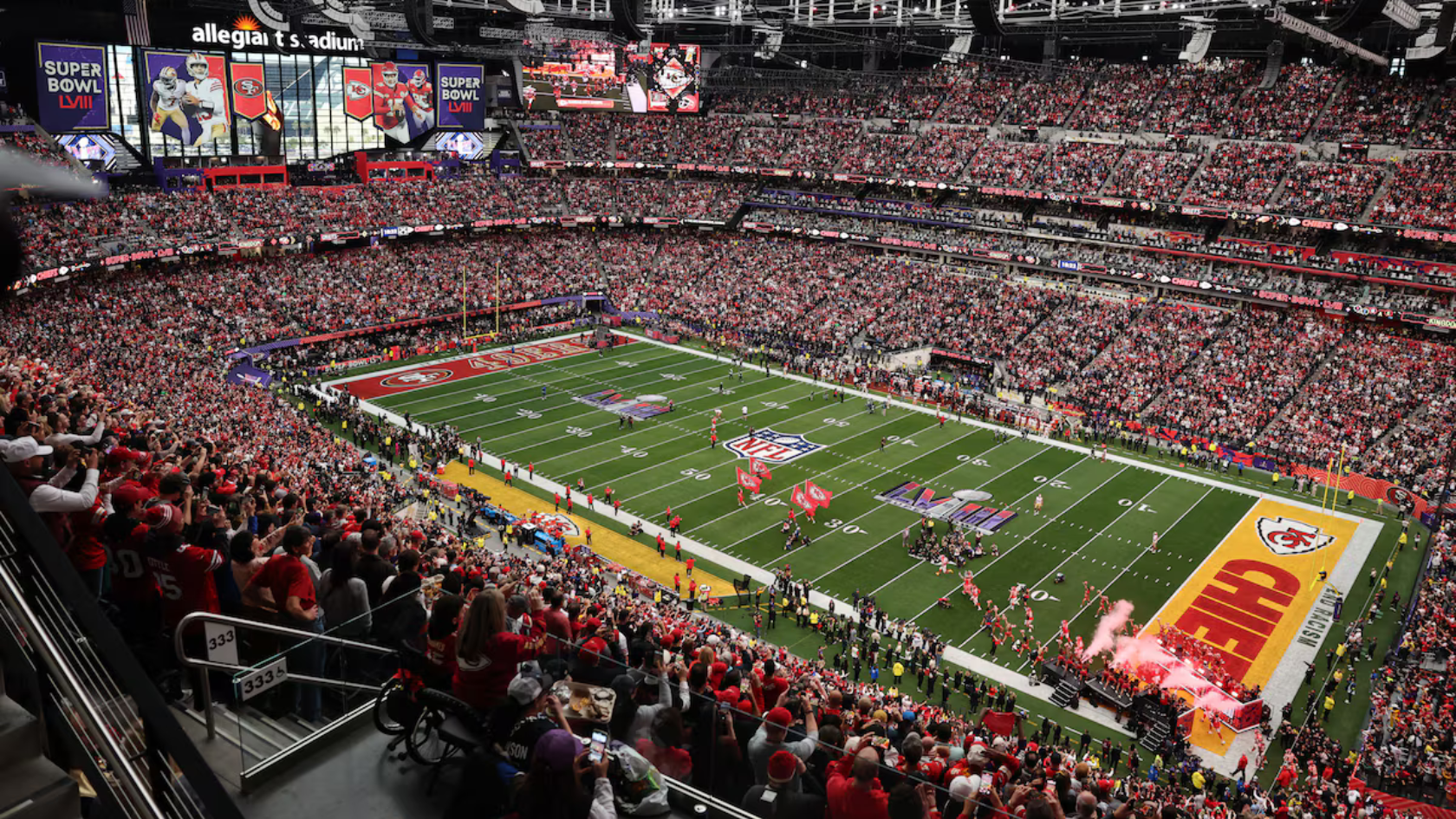
When people search for what the Super Bowl teaches us about scalable sports event staffing, they are really asking a bigger question:
How do you staff the biggest, most complex events in the world… without chaos?
The Super Bowl is not just a football game. It is a masterclass in logistics, planning, and people management.
Every year, the super bowl transforms a host city into the center of the sports universe.
And behind every touchdown, halftime show, and viral moment?
Thousands of trained professionals.
This is what scalable staffing really looks like.
Learn the Super Bowl secrets to scalable sports staffing.
Table of Contents
The Super Bowl Is More Than a Game
The National Football League doesn’t just organize a championship.
It produces a week-long spectacle.
- Media days
- Celebrity appearances
- Corporate events
- Sponsor activations
- Security operations
- Concerts and fan festivals
The Super Bowl is a citywide operation.
When the Super Bowl lands in places like Los Angeles, Las Vegas, or New York, it impacts transportation, hotels, restaurants, and public safety across the entire region.
It’s not just a game.
It’s a national operation inside the United States.
And it requires scalable staffing at every level.
What “Scalable” Really Means
Scalable staffing means:
- Hiring thousands of workers quickly
- Training them efficiently
- Deploying them strategically
- Maintaining quality and consistency
- Scaling down smoothly after the event
The Super Bowl event may last a few hours.
But staffing efforts begin months — sometimes years — in advance.
Cities like San Francisco and regions like the Bay Area have experienced this firsthand.
When Super Bowl LVI was held at SoFi Stadium, staffing levels surged across hospitality, transportation, and security sectors.
That’s scalability in action.
Lesson 1: Plan for the Peak, Not the Average
The Super Bowl draws:
- 70,000+ attendees inside the stadium
- Hundreds of thousands at external events
- Millions watching worldwide
During Super Bowl LVII and Super Bowl LVIII, cities had to prepare for historic tourism numbers.
You cannot staff for a normal Sunday.
You must staff for the biggest surge imaginable.
This is the same lesson global tournaments like the FIFA World Cup and the World Cup teach organizers worldwide.
Peak demand defines your staffing model.
Lesson 2: Security Is Non-Negotiable
The Super Bowl is classified as a high-level security event.
Agencies including United States Department of Homeland Security coordinate with:
- Local law enforcement
- Private security teams
- Emergency medical services
- Federal agencies
Staffing isn’t just about ticket scanners and ushers.
It includes:
- Intelligence coordination
- Crowd flow engineers
- Crisis response teams
- Cybersecurity professionals
When 70,000+ fans gather in one location, safety becomes the foundation of the entire operation.
Without scalable security staffing, the Super Bowl simply cannot happen.
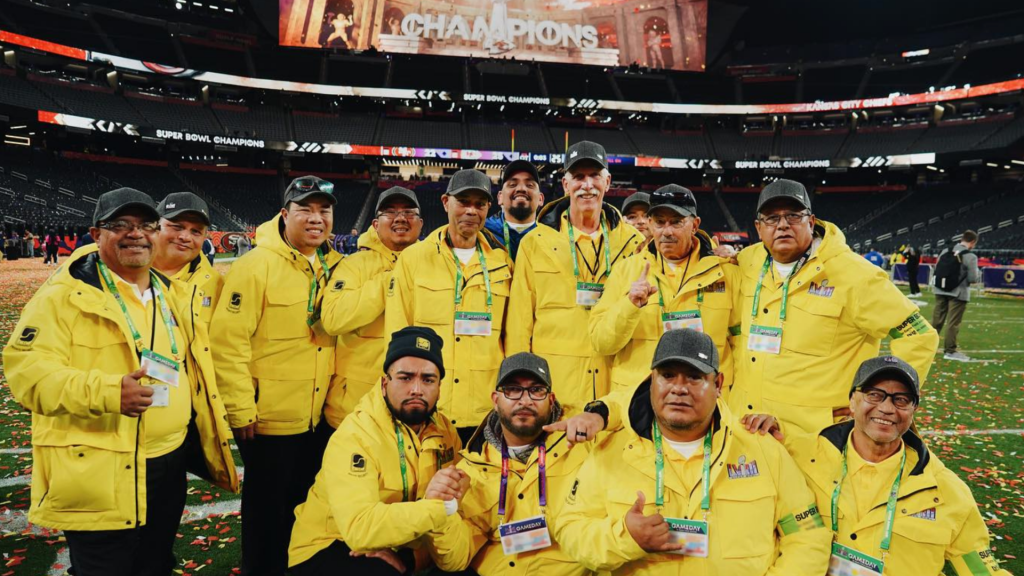
Lesson 3: The Fan Experience Is Everything
The super bowl experience begins long before kickoff.
Fans attend:
- Concerts
- Fan festivals
- Sponsor activations
- Media events
When artists like Bad Bunny headline events during super bowl week, attendance spikes dramatically.
That means more:
- Ticketing staff
- Crowd managers
- Brand ambassadors
- Guest services teams
Scalable staffing directly impacts the fan experience.
And great staffing drives powerful fan engagement.
If fans wait too long in lines, struggle to find entrances, or can’t get help, the entire perception of the event suffers.
The best staffing models make support feel invisible.
Lesson 4: It’s a Multi-Industry Operation
The Super Bowl doesn’t just employ stadium workers.
It activates:
- Hotels
- Ride-share drivers
- Restaurants
- Retail stores
- Production crews
- Cleaning teams
Even unrelated industries feel the ripple effect.
For example:
- Century Fasteners Corp may see increased supply demand for temporary builds.
- Local companies like Conifer Gutter Service and other home services providers benefit from pre-event facility upgrades.
Major sporting event infrastructure often requires months of physical preparation.
Staffing scales across sectors.
Lesson 5: Leadership Structure Must Be Crystal Clear
Large-scale events fail when leadership is unclear.
The Super Bowl operates with defined hierarchies:
- Executive committees
- Operations directors
- Venue managers
- Section supervisors
When the Seattle Seahawks or New England Patriots compete in a Super Bowl, team operations integrate with league-wide command structures.
It’s a coordinated machine.
Strong leadership enables thousands of event staff members to function as one unit.
Lesson 6: Data Drives Modern Staffing
Modern super bowl planning is powered by:
- Predictive attendance modeling
- Real-time crowd tracking
- Mobile ticket analytics
- Social listening
Younger audiences, especially Gen Z, amplify everything through social media.
One staffing breakdown can go viral in minutes.
That’s why modern scalability includes:
- Rapid-response teams
- Digital monitoring units
- Real-time decision centers
Events like the Super Bowl LX will rely even more heavily on live analytics.
Lesson 7: Venue Matters
Venue capacity defines staffing intensity.
For example:
- Levi’s Stadium
- SoFi Stadium
Different layouts require different:
- Entry teams
- Security checkpoints
- Concession staffing models
- Parking logistics
A Super Bowl event in a dense metro area like Los Angeles demands different traffic control than one in Las Vegas.
Scalability must adapt to geography.
Lesson 8: It’s a Global Spotlight
The Super Bowl may be rooted in the United States, but its audience is global.
International athletes attend.
Celebrities travel in.
Global sponsors activate.
When international stars like Shohei Ohtani appear at related events, international media attention increases.
That global lens raises staffing expectations.
Multilingual support.
Cultural sensitivity.
International guest services.
The same is true for tournaments like the FIFA World Cup.
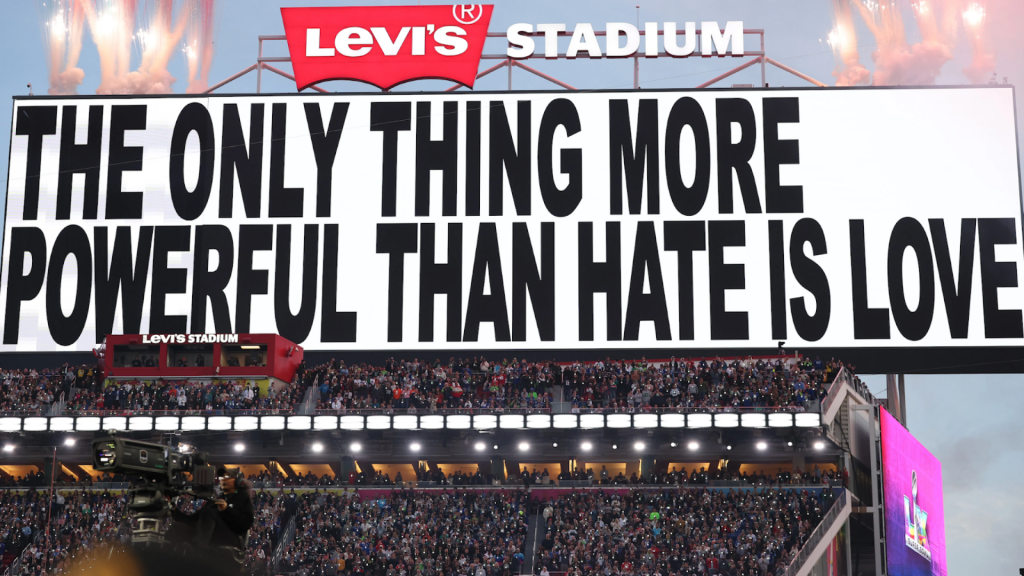
Lesson 9: Community Integration Is Essential
The Super Bowl integrates into:
- Schools
- Nonprofits
- Local charities
Events during Black History Month or awareness campaigns like International Wheelchair Day often align with broader programming around the game.
Community partners — including institutions like Saint James School — may host auxiliary events.
Scalable staffing extends beyond the stadium into neighborhoods.
Lesson 10: Corporate Influence Is Everywhere
The Super Bowl attracts:
- CEOs
- Founders
- Investors
Members of groups like Forbes Councils attend high-level networking events.
An industry leader or managing partner from a major firm might host private receptions.
Even executives like a corporate vice president may coordinate brand activations.
Staffing these VIP environments requires:
- Credentialed access teams
- Discreet security
- Premium guest services
It’s a different staffing tier entirely.
Lesson 11: Experience Beats Volume
It’s tempting to think scalable staffing means “more people.”
But the big game teaches a deeper lesson.
It’s about:
- Training
- Communication
- Redundancy planning
- Flexibility
A well-trained team of 2,000 outperforms an unprepared team of 3,000.
Companies like Rocket Alumni Solutions that manage digital recognition platforms understand this principle: systems must scale cleanly.
People systems are no different.
Lesson 12: Entertainment Multiplies Complexity
The halftime show alone can require:
- Stage engineers
- Pyrotechnics crews
- Audio teams
- Broadcast specialists
During Super Bowl week, concerts, influencer events, and branded experiences stretch staffing resources thin.
Every added activation multiplies staffing needs.
And each one must meet the same high standards.
Lesson 13: Reputation Is on the Line
The Super Bowl represents the pinnacle of professional football.
It reflects directly on the National Football League.
If staffing collapses, headlines follow.
That’s why every Super Bowl is treated like a national showcase for operational excellence.
Cities compete fiercely to host because a well-executed Super Bowl elevates their global reputation.
Lesson 14: Scale Down Is Just as Important
After confetti falls, staffing doesn’t disappear.
There’s:
- Breakdown crews
- Equipment transport
- Cleanup teams
- Financial reconciliation
Scalable staffing includes a responsible wind-down phase.
Failing to plan post-event operations can erase all prior success.
How These Lessons Apply Beyond Football
The lessons from the Super Bowl apply to:
- Corporate expos
- Political conventions
- Global tournaments
- Large concerts
- The FIFA World Cup
- Major championship games
Any large-scale sporting event faces similar pressures.
The blueprint is clear:
- Plan for surge.
- Secure aggressively.
- Prioritize the fans.
- Integrate with the community.
- Use data intelligently.
- Build strong leadership layers.
- Prepare for global visibility.
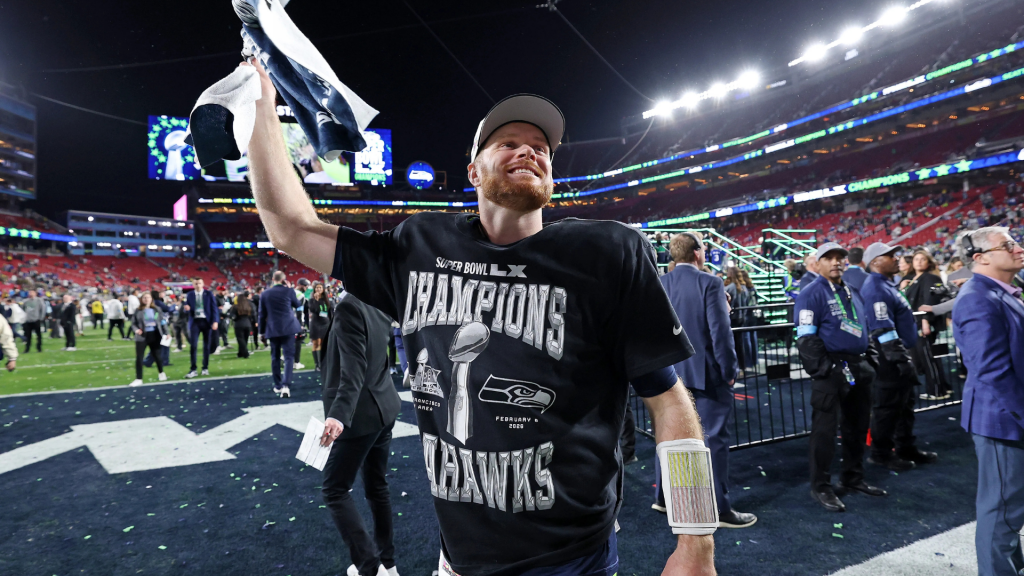
Final Takeaway
If you truly study what the Super Bowl teaches us about scalable sports event staffing, one truth becomes obvious:
Success at scale is never accidental.
The Super Bowl works because:
- Planning starts early.
- Roles are defined clearly.
- Technology supports people.
- Security is layered.
- The fan experience is prioritized.
Every year, the Super Bowl proves that massive operations can feel seamless.
But only when scalable staffing is done right.
From Los Angeles to Las Vegas.
From Levi’s Stadium to SoFi Stadium.
From regular season matchups to the championship itself.
The Super Bowl is more than a game.
It is the ultimate case study in scalable event staffing.
And for anyone managing large teams, large crowds, or large expectations…
There may be no better teacher.